Can You Use a Drop Serve in Pickleball? Drop Serve vs Volley Serve
Yes, you can serve after letting the ball bounce in pickleball. This is called a drop serve. It is not a second serve or a concession for beginners: it is an option recognised by USA Pickleball. The key is to distinguish dropping the ball from propelling it into the ground.
How to prepare a legal drop serve
Release the ball from a natural height without throwing it in any direction, then strike it after the bounce. The release must be visible to the receiver and can be made with one hand or with the paddle, without deliberately adding spin when releasing it. The rules allow more than one bounce before contact and do not restrict where the ball bounces on the playing surface. This does not change the server’s positioning requirements. See rules 7.B and 7.D in the 2026 official rulebook.
Drop serve vs volley serve
| Aspect | Drop serve | Volley serve |
|---|---|---|
| Contact | After the bounce | Before the ball bounces |
| Motion and height | The three restrictions in the next column do not apply | Upward motion, contact not above the waist, and the highest part of the paddle head not above the wrist |
| What to observe when testing it | Whether you can comfortably repeat the release and contact after the bounce | Whether you can coordinate the release and strike without rushing |
With both serves, serve diagonally and clear the kitchen, including its line. At contact, keep at least one foot on the ground behind the baseline; do not step on the court or outside the imaginary extensions of your serving area. Reference: official rules summary. For orientation, see our guide to pickleball court lines and dimensions.
Which one should you practice first?
Start with the serve you can repeat calmly. Do not choose simply by copying a spectacular serve: check whether your preparation feels comfortable and whether you can find contact without chasing the ball. USA Pickleball recommends building a routine and prioritising consistency before power in its serving tips.
If you practise both, keep the same paddle, ball and target. This lets you compare feel without changing every variable at once. No type of serve guarantees more points by itself.
DPRADIX drill: two serve types, one decision
This is an editorial practice suggestion, not a skill test or validated protocol.
- After warming up, choose a large target area away from the lines.
- Hit ten drop serves at a comfortable pace. Note successful serves and what caused misses: preparation, direction or depth.
- Rest, then hit ten volley serves toward the same area.
- Repeat on another day before drawing conclusions. Keep one specific observation for your next session.
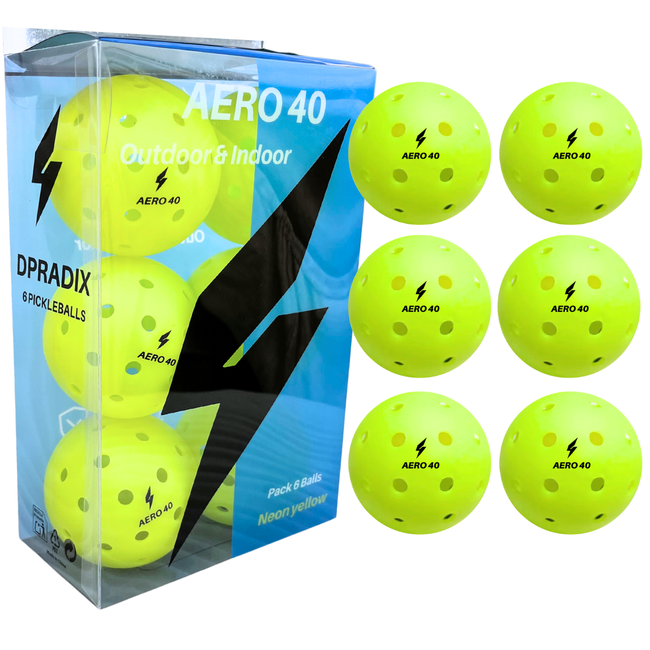
You can use several DPRADIX AERO 40 balls to organise the sets; remove loose balls before moving around the court. You do not need a different paddle just to try this routine.
Frequently asked questions
Does the bounce before the serve count toward the two-bounce rule?
No. After the serve, the receiver must let the ball bounce and the serving team must let the return bounce. We explain this in our basic pickleball rules guide.
Do I have to switch to a volley serve as I improve?
No. A drop serve is not a phase that you must abandon. Consider your consistency and always check the rules of the competition in which you plan to play.
Sources reviewed: September 25, 2026. Rules reference: USA Pickleball 2026; check the rules applicable to your event.
Generated editorial image illustrating the topic; it is not a technical sequence or a depiction of specific paddle models.